
The Celebrity CRM Revolution: When People Chase You, Not the Other Way Around
A new software paradigm for a world where people don't need to be convinced. They want to follow. They want to serve. They only need structure.

The traditional CRM chases leads. The Celebrity CRM gives structure to devotion.
Imagine waking up every morning to thousands of messages from people asking how they can help you. Not customers asking about your product. Not leads you need to nurture. But believers, devotees, passionate followers who are emotionally invested in your mission and ready to give their time, energy, money, and skills.
Now imagine having no effective way to organize all that energy.
This is the reality for spiritual leaders, wellness teachers, influential authors, and movement founders around the world. They've already built trust. They've already created a brand. They've already earned devotion. But the tools available to them—all 100,000+ CRMs built over the past three decades—were designed to solve a completely different problem.
Traditional CRM was built to chase. To follow up. To convert skeptics into customers. It's a tool for hunters, not gatherers. A tool for sellers, not givers.
What if we flipped the entire model on its head?
The Problem Nobody Talks About
Let's talk about a problem that's invisible to most businesses but crushing for spiritual and purpose-driven leaders.
When you have 10,000 followers on social media, you have attention. When you have 100,000, you have influence. When you have millions ready to literally die for your cause—you have a scaling crisis.
Consider a renowned spiritual teacher with temples across continents. Thousands want to volunteer. Thousands more want to donate. Students want mentorship. Regional leaders need coordination. Events need organizing. Projects need staffing.
Traditional CRM says: "Great! Add them to a list. Segment them by interest. Send email campaigns. Track conversions."
But this leader isn't trying to convert anyone. These people are already converted. They're showing up asking: "Where do I fit? How can I serve? What role can I play?"
And here's the heartbreaking part: without proper structure, most of that energy dissipates. Volunteers fall through the cracks. Talented contributors never find the right project. Regional initiatives lack coordination. The leader becomes a bottleneck—everyone wants direct access, but direct access doesn't scale.
The Birth of Celebrity CRM
We realized something fundamental: there are two types of influence in this world.
There's transactional influence—businesses convincing customers to buy. Then there's gravitational influence—leaders who've built such trust and authenticity that people are pulled toward them organically.
The first type needs traditional CRM. The second type needs something else entirely.
We call it Celebrity CRM—not because it's for celebrities in the entertainment sense, but because it's for anyone who has become a source rather than a seeker. Anyone with raving fans. Anyone whose challenge is organization, not acquisition.

What Makes It Different
Celebrity CRM operates on completely opposite principles from traditional CRM:
Traditional CRM Principles:
- Chase leads relentlessly until they convert
- Maintain separate systems for prospects vs. customers
- Focus on pipeline velocity and conversion rates
- Built for businesses selling products and services
- Success = number of deals closed
Celebrity CRM Principles (OrgOrbit):
- Followers find you organically—they're already believers
- One unified system for everyone: leaders, volunteers, donors, students
- Focus on organizing passion into contribution
- Built for leaders inspiring movements and communities
- Success = measurable impact and scalable devotion
Connection-Based Dynamic Hierarchy: The Core Innovation
Here's where it gets interesting.
Traditional systems treat people as isolated records in a database. Name, email, phone number, tags. Flat lists that you segment and message.
But organizations aren't flat. Especially purpose-driven organizations. They're networks of relationships. They're lineages. They're people who brought other people, who trained other people, who inspired other people.
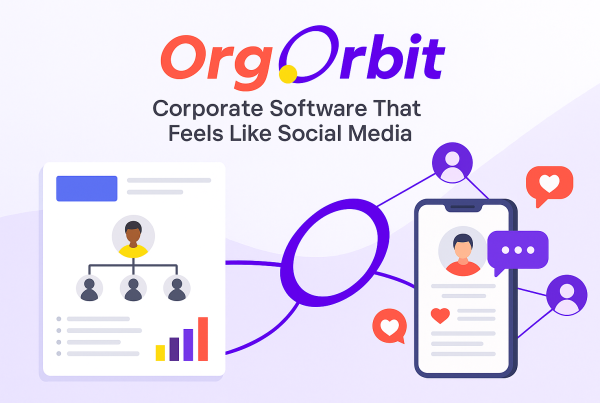
OrgOrbit maps these connections natively.
When someone joins your movement, you don't just get their contact info. You see who brought them. You can assign them to a department, a project, a role. You can track their contributions, promote them based on real work, and broadcast messages to nested groups within your hierarchy.
Imagine you're running a wellness retreat network. You have:
- Regional coordinators in 15 countries
- Certified teachers at different mastery levels
- Students in various training cohorts
- Volunteers helping with events
- Donors supporting specific initiatives
In traditional CRM, these are separate lists. Separate campaigns. Separate headaches.
In OrgOrbit, they're one connected system. You can broadcast to "all Level 3 teachers in Asia" or "volunteers who helped with the last event in Mumbai" or "donors who contributed to the scholarship fund"—without maintaining any separate lists. The hierarchy is dynamic. As people grow, they move. As projects launch, teams form. The structure lives and breathes.
The Marketplace Dimension
But OrgOrbit isn't just an internal operating system. It's also an ecosystem.
Picture LinkedIn, but for spiritual and purpose-driven connections. A marketplace where:
- Seekers can discover leaders across traditions, teachings, and causes
- Leaders can showcase their mission and active projects
- Contributors can apply to specific roles where their skills will create real impact
- Communities can collaborate across organizational boundaries
Someone in Lagos wants to contribute to environmental spiritual work? They can filter by cause, see compatible leaders, explore active projects, and apply to a specific volunteer role—all within minutes.
A yoga teacher in Kerala building a scholarship program? They can post the need, accept applications from mentors and fundraisers, and form their team from people who are already aligned with their mission.
The marketplace removes friction. It connects authentic seekers with authentic givers. It democratizes access to purpose-driven work.

Real Stories, Real Impact
Let me tell you about three leaders who need this yesterday.
The Temple Trust Leader
He oversees 50 temples across India. Thousands of devotees. Hundreds of volunteers rotating through prasadam preparation, festival coordination, daily services. The problem? He has no visibility. Who's doing what? Who brought new volunteers? Which regional chapters need support? Everything runs on WhatsApp groups, Excel sheets, and institutional memory.
With OrgOrbit, every volunteer has a profile. Every temple is a branch in the hierarchy. Every festival is a project with assigned roles. He can broadcast announcements by region, by role, by temple. He can track activities, celebrate top contributors, and identify emerging leaders who deserve promotion.
Structure transforms chaos into coordinated devotion.
The Wellness Teacher
She built a 200,000-person following through YouTube teaching meditation and holistic health. Students ask daily: "How can I volunteer? How can I learn more? Can I help organize local events?"
She wants to say yes. She wants to train teachers. She wants local chapters. But coordinating all that while teaching? Impossible.
OrgOrbit lets her scale without losing soul. Students apply for teacher training cohorts. Graduates become certified at different levels. Local coordinators form chapters. Each chapter can run its own projects while staying connected to her core mission. She maintains visibility and authority without becoming a bottleneck.
The Movement Founder
He started a movement for sustainable living that went viral. Now 50,000 people want to be involved. Some want to start local initiatives. Some want to fundraise. Some have skills in design, tech, event planning.
All that energy, all that talent—and it's scattering because there's no structure to catch it.
With OrgOrbit, he creates project templates: "Start a community garden," "Organize a zero-waste workshop," "Create educational content." People apply to contribute. Teams form. Regional leaders emerge. The movement becomes a coordinated force instead of dispersed enthusiasm.
Why Now?
You might wonder: if this need has existed for decades, why hasn't someone built this already?
Three reasons:
First, the scale of influence has exploded. Twenty years ago, having 10,000 devoted followers meant you were extraordinarily influential. Today, it means you're a mid-tier YouTuber. The coordination problem has become exponentially more acute.
Second, traditional business software companies don't understand this use case. They see the world through a sales lens. Their solution to everything is "add it to the funnel." They can't conceptualize a system where the goal isn't closing deals—it's organizing devotion.
Third, the technology for connection-based dynamic hierarchies only recently became feasible at scale. Modern graph databases, real-time synchronization, mobile-first design—these enable what we're building.
The Vision: A World of Structured Giving
Here's what we're really building toward.
Imagine a world where every spiritual teacher, wellness leader, and purpose-driven influencer has the infrastructure to harness the energy of their followers. Where passionate people can instantly find meaningful ways to contribute. Where coordination happens naturally because the structure supports it.
Traditional CRM enabled capitalism to scale. It helped businesses grow by systematizing sales.
Celebrity CRM will enable compassion to scale. It will help movements grow by systematizing service.
When you remove the friction between devotion and contribution, beautiful things emerge:
- More temples get built because volunteer coordination is seamless
- More students get trained because cohort management is effortless
- More regional chapters flourish because they have autonomy with alignment
- More grassroots projects succeed because teams form naturally around opportunities
- More impact gets measured because the system tracks outcomes, not just activities
This isn't just software. It's infrastructure for a better world.
The Invitation
If you're reading this and thinking, "This is exactly what I need"—you're probably right.
If you're a leader who:
- Has thousands of followers ready to serve
- Struggles to organize all that energy
- Loses talented contributors because there's no clear path for them
- Wants to scale without losing authenticity
- Needs structure but doesn't want bureaucracy
Then OrgOrbit is for you.
If you're a contributor who:
- Wants to find leaders and causes that align with your values
- Has skills, time, or resources to offer but doesn't know where to start
- Wants your contribution to be meaningful, tracked, and celebrated
- Desires clear pathways for growth within organizations you believe in
Then OrgOrbit is for you too.
We're not building another CRM. We're building the opposite of CRM. We're building infrastructure for a world where the question isn't "How do I get people to pay attention?" but rather "How do I organize all this attention into impact?"
The Celebrity CRM revolution is here. The era of chasing is over. The era of structure begins now.
Ready to Give Structure to Your Movement?
Request a personalized demo and see how OrgOrbit can model your current community and transform scattered devotion into coordinated impact—in minutes, not months.
Request Your Demo